Replacing a roof is a big project, and the estimate you receive is the roadmap for everything that follows. Yet many homeowners find roofing estimates confusing: technical terms appear without explanation, prices vary from one contractor to the next, and “surprise” extras can show up mid-project. This guide breaks down the language, the pricing, and the process so you can read your estimate with confidence, compare proposals fairly, and choose the right roofing contractor for your home.
1) Industry terms and shorthand.
Roofers use abbreviations and trade language that aren’t obvious at first glance. If you don’t know the difference between a roofing square and a square foot, or where “LF” shows up on your bill, it’s easy to lose track of costs.
2) Variable pricing.
Roofs aren’t identical. Pitch, access, layers to remove, material brands, and ventilation needs all affect labor and materials. Two homes with the same footprint can have very different totals.
3) Complex systems, not just shingles.
A roof is a system of parts working together: decking, underlayment, ice/water barrier, ventilation, flashing, ridge components, starter courses, pipe boots, and more. If your estimate only lists “shingles,” it’s incomplete.
4) Hidden or unexpected conditions.
Until the old roof comes off, contractors can’t see everything. Spaced (skip) decking, rotted sheathing, damaged flashing, or code-required upgrades may add cost if they weren’t visible during the initial inspection.
5) Insurance interactions.
If you’re replacing a hail- or wind-damaged roof through insurance, policy type matters. Actual Cash Value (ACV) and Replacement Cost Value (RCV) settle differently, and coverage gaps (like certain code upgrades) can shift costs back to you if they’re not addressed up front.
Use this checklist when you are reviewing your roof replacement estimate. The more of these you see in writing, the smoother your project will be.
1) Full Scope of Work
A detailed, line-item description of everything included, tear-off, disposal, underlayment type, ice/water shield locations, flashing work (chimneys/sidewalls), ventilation changes, starter and ridge systems, drip edge, pipe boots, and cleanup. Each item should note what, where, and how much.
2) Accurate Measurements
The estimate should state the roof area (in squares or square feet), linear footage of eaves/rakes/ridges/valleys, and the number/size of penetrations (vents, stacks, skylights). Precise measurements prevent padding or under-ordering. The estimate should account for all the components of your roof being replaced.
3) Materials by Brand, Line, and Specs
Look for brand and product line (e.g., architectural shingles vs. designer), wind/impact ratings where relevant, underlayment type (synthetic vs. felt), ice/water shield (where installed), metal gauge/finish for flashing and drip edge, and ventilation components. “Like-kind” vagueness invites cut corners.
4) Clear Cost Breakdown
You should see costs divided into labor, materials, disposal/haul-off, permit/inspection, and other line items (e.g., decking replacement per sheet). Lump-sum “total only” estimates make it hard to compare proposals or understand value.
5) Warranty Information
Two pieces here:
Manufacturer warranty (length, coverage level, what voids it).
Workmanship warranty (who covers leaks due to installation, for how long, and response time).
If a higher manufacturer warranty requires specific components (full system, ridge/hip caps, starter, etc.), your estimate should show those items.
6) Licensing, Insurance, and Permits
The proposal should confirm the contractor’s local license, liability, and workers’ comp coverage, and who pulls permits. This protects you and ensures the project passes inspection.
7) Cleanup and Property Protection Plan
Good estimates spell out daily magnet sweeps, debris containment, landscape protection, dumpster placement, and final inspection/cleanup. This is where professionalism shows.
8) Schedule and Communication
You should expect a projected start window, estimated duration, how weather delays are handled, and a named point of contact. You should know who to call. Most roof replacement estimates have the contact information of your roofer on them. This is a great time to ask your contractor any questions, including your job’s timeline.
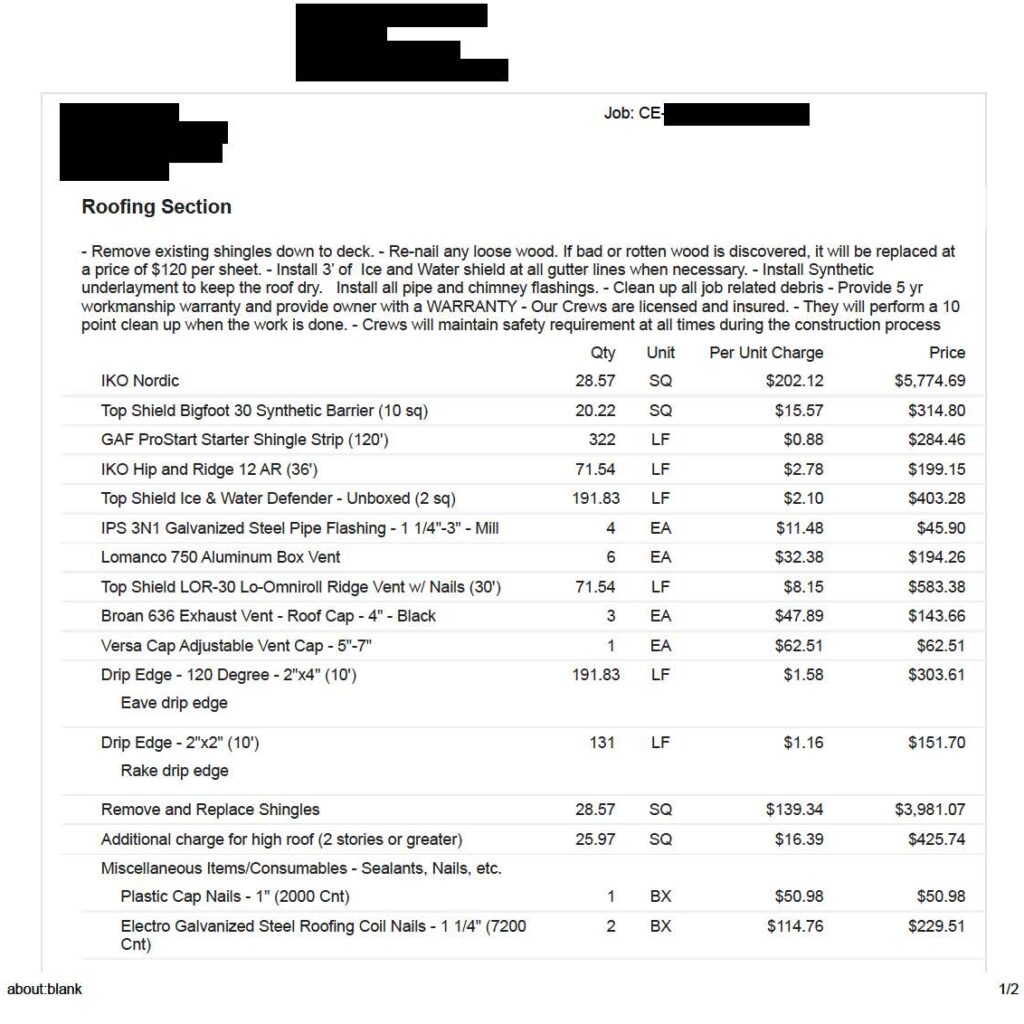
A single number with “roof replacement” underneath isn’t enough. Ask the contractor to itemize and to address these common add-ons up front:
Insurance coverage gaps. With ACV policies, the insurer pays the depreciated value only. Recoverable depreciation is paid after proof of completion (if your policy allows it). This is typically an RCV policy. Confirm how your policy type affects your out-of-pocket expenses.
Code upgrades not covered. Local codes may require the use of ice/water shield, drip edge, or ventilation modifications. These are crucial upgrades to prevent more serious roofing issues like ice dams. Some policies cover code upgrades; others don’t. Ask what your city requires and whether coverage applies.
Unexpected damage. Rot, mold, or spaced (skip) decking discovered after tear-off may require sheathing replacement. Make sure the estimate lists a per-sheet price and who approves additional work.
Steep/complex roof charges. Higher pitch, multiple stories, and limited access can increase labor costs. These should be stated clearly somewhere in your roof replacement estimate.
Flashing and chimney work. If flashing is to be replaced, specify material and footage; if to be re-used, confirm condition and warranty.
Transparency on these points protects your budget and prevents disputes later.
When reviewing roofing bids, it’s important to understand what drives the cost of a replacement. Roof size is one of the biggest factors; larger roofs require more materials and labor hours to complete. The pitch and height of your roof also play a role, since steeper or taller roofs require additional safety measures and more time to install properly. Tear-off costs can vary as well; homes with multiple shingle layers take longer to remove and create higher disposal fees.
Material choice has a significant impact, too, with prices differing between architectural shingles, impact-resistant products, synthetic shakes, metal panels, or tile systems. Beyond materials, each roof’s design and system components also affect pricing, factors such as upgraded underlayments, extended ice-and-water barrier coverage, ventilation improvements, or premium flashing. Access to your home matters as well; tight driveways, limited staging areas, or sensitive landscaping can slow production and increase labor. Finally, local codes and permit requirements influence both materials and inspection steps. While one contractor’s price may appear lower, it’s often because scope items, code upgrades, or quality components are missing. A fair, detailed proposal explains exactly what’s included so you can make a true comparison between bids.
Once you receive a roof replacement estimate, take time to read it carefully. Start by checking the measurements, make sure the total squares (SQ), linear footage (LF), and square footage (SF) align with the size of your home. Review the full scope of work to confirm that all roof system parts are listed, including underlayment, ice-and-water shield, flashing, ventilation, ridge and starter shingles, drip edge, and pipe boots. Next, verify that the materials specify brand, product line, color, and performance ratings, such as impact or wind resistance. The product and color of your roof should always be in writing. Look at the cost breakdown for labor, materials, disposal, permits, and any contingencies for hidden damage. Check warranty information to understand both manufacturer and workmanship coverage, and note any references to local code compliance to ensure the project will meet inspection standards. A professional estimate should also include a written plan for cleanup and property protection during and after the job. Ask about potential unknowns, such as decking or structural repairs, and make sure any extra charges are listed with a per-unit price. Clarify the payment schedule and how insurance coordination will be handled if applicable. Most importantly, insist that every promise, price, and scope item appears in writing; clear documentation is your best protection and ensures your roof replacement stays on budget and on track.
Understanding the shorthand helps you follow quantities and costs.

SQ (Roofing Square)
What it means: One roofing square equals 100 square feet of roof surface.
Where you’ll see it: Shingle quantities, underlayment coverage, and pricing often appear per SQ (e.g., “30 SQ tear-off and install”).
Why it matters: Most major materials are ordered and priced by the square; knowing your total SQ helps you compare bids.
LF (Linear Foot)
What it means: A measurement of length, one foot in a straight line.
Where you’ll see it: Drip edge, ridge caps, starter strip, flashing, valley metal, and gutters. Example: “200 LF drip edge.”
Why it matters: Per-LF charges add up quickly; accurate LF counts prevent over- or under-billing.
SF (Square Foot)
What it means: A measurement of area (length × width).
Where you’ll see it: Decking/sheathing replacement (e.g., “replace 32 SF of damaged OSB”), ice/water shield coverage on valleys/eaves, and flat roof sections.
Why it matters: Some components are priced by SF rather than SQ, especially repairs and specialty membranes.
BX (Box)
What it means: A boxed quantity of materials (e.g., nails, screws, fasteners, small accessories).
Where you’ll see it: Line items like “2 BX coil roofing nails” or “1 BX cap nails.”
Why it matters: While small individually, BX items reflect real costs; they should be reasonable relative to your roof size and scope.
Tip: Keep a simple “conversion cheat sheet” handy:
1 SQ = 100 SF. If your estimate shows 28 SQ, that’s ~2,800 SF of roof surface.
You can also see common roofing-related abbreviations here.
ACV vs. RCV:
An ACV policy pays depreciated value only; you may owe more out-of-pocket until work is complete (and depreciation may be non-recoverable).
An RCV policy covers replacement cost (minus deductible). Just like an ACV policy, your depreciated value will be released first, releasing depreciation after proof of completion.
Code upgrades: Some policies include ordinance/code; others don’t. Ask whether ice/water barrier, ventilation changes, or drip edge are covered. This is a great question to ask your insurance agent before filing a claim.
Supplementing: If hidden damage or code-mandated items are discovered during the tear-off, your contractor may submit supplements. Clear documentation speeds approval.
A solid roof estimate is clear, detailed, and transparent. It explains the scope, shows accurate measurements, names the materials, breaks down costs, outlines warranties, addresses code and insurance realities, and includes a plan to protect your property and clean up thoroughly. If an item is unclear, ask for clarification in writing. When contractors provide the same level of detail, you can compare proposals fairly and choose the team that offers the best value, not just the lowest number.