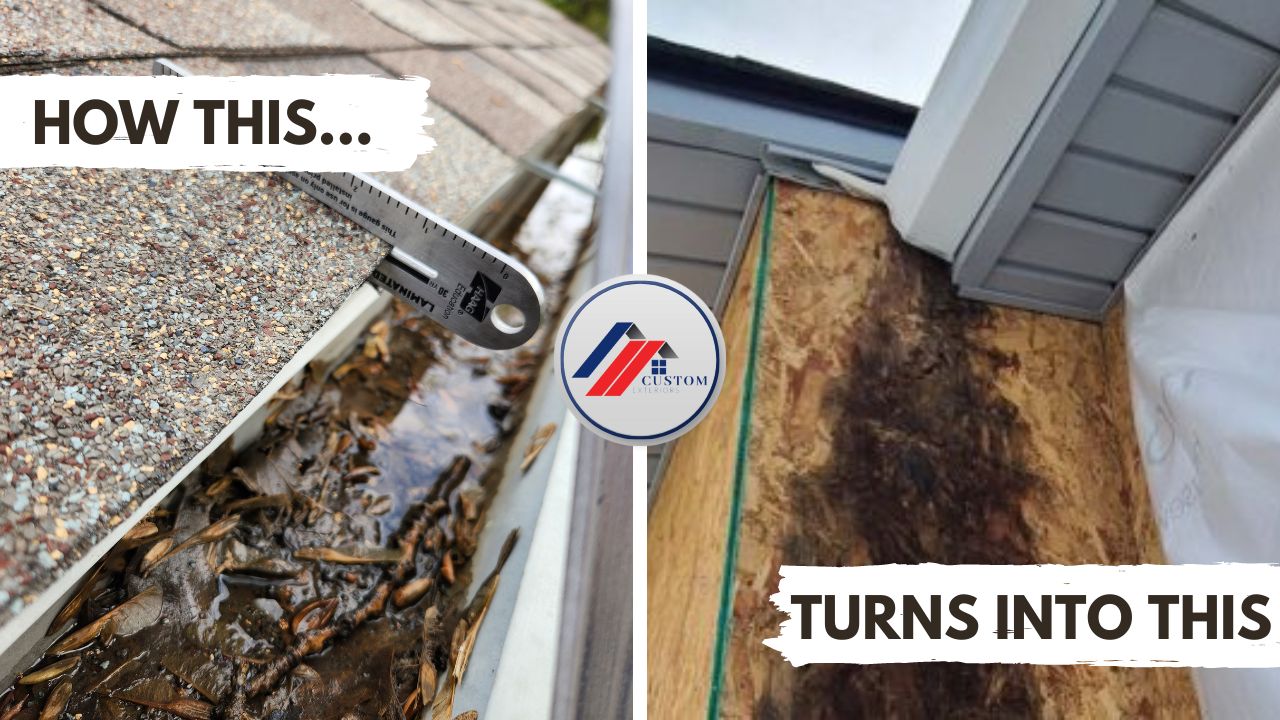
The pictures above were both taken by our inspectors on Northern Colorado homes. If that doesn’t highlight the importance of proper gutter maintenance, we don’t know what does. Not only do we install gutters in Cheyenne and across Colorado, we make sure our customers know how to properly maintain them!
At Custom Exteriors, we spend every season on homes across Colorado, and one of the most common questions we hear from homeowners is simple: How often should I clean my gutters? The truth is that our state’s weather is tough on exterior systems. Between heavy spring winds, early snowstorms, and fall leaf drop, gutters fill faster here than in many other parts of the country. When this happens, water can’t move away from your home as it should, leading to issues with your roof, siding, and foundation.
This guide is designed to provide you with a clear and easy-to-understand answer, so you know exactly when to schedule gutter cleaning and what signs to look out for. Whether you’re trying to prevent water damage, planning seasonal home maintenance, or deciding if it’s time to call a professional, this information will help you protect your home and avoid costly problems down the road.
Gutter cleaning is one of the most important seasonal tasks for Colorado homeowners. Our weather changes fast, and each season brings conditions that can overload your gutters. In the spring, wind pushes dirt and debris into your system. Summer storms drop heavy rain that your gutters need to move away from your home. Fall adds leaves and pine needles, and winter snowmelt can back up if the gutters are already full. We have seen this lead to costly damages like ice dams.
When gutters can’t drain properly, water has nowhere to go except over the edges or back toward your home. This can lead to roof leaks, damaged fascia, stained siding, and even foundation issues if water begins to pool around the base of your property. These issues are preventable with routine gutter care.
Adding gutter maintenance to your seasonal checklist ensures water flows as it should. It also gives you a chance to spot small problems, such as loose fasteners or early signs of wear, before they become major issues that require repairs. Regular attention helps protect your entire exterior and reduces the likelihood of unexpected damage, saving you time and money in the long run.

Imagine your home during a heavy rainstorm. Where does all that water go? On to the largest exterior surface of your home, your roof. Your gutters are the primary path to take all the rainwater gathered across your roof and safely guide it away from your home. But you’re not alone if you aren’t sure what gutters do or why they’re so important.
Gutters, those long channels that run along some edges of your roof, play a crucial role in protecting your home. Their job is simple but incredibly important: they catch rainwater as it runs off your roof and direct it away from your home. This might not sound like a big deal at first, but without gutters, your home is at real risk for water damage.
Here’s why gutters are important:
Your gutters play a major role in moving water away from your home. When they’re clean and working correctly, they prevent water from overflowing onto your roof, siding, and foundation. Once gutters clog, water begins to spill over the edges or back up under the shingles, which can lead to leaks, damaged fascia, staining on your exterior walls, and even foundation problems if water pools around the base of your home. Keeping your gutters clear is one of the simplest ways to avoid costly water damage and protect the structure of your home.
Gutters are essential in preventing mold and mildew from forming on your siding and other surfaces. By efficiently directing rainwater away from your home, gutters stop water from lingering on your exterior walls. When water is allowed to sit, it creates the perfect environment for mold and mildew to grow, which can not only damage your siding but also lead to health concerns. Once mold starts, it can spread to your roof sheathing, attic, or exterior walls. In Colorado’s freeze-thaw cycles, this trapped moisture also increases the risk of rot. Regular gutter cleaning keeps water moving and stops moisture from lingering in places it shouldn’t, helping reduce the chances of mold growth and long-term damage to your home’s exterior.
Gutters also play an important role in preserving your landscaping. When gutters are working properly, they direct rainwater away from your home and prevent it from overflowing onto your flower beds, shrubs, and other landscaping features. Without gutters, heavy rain can cause soil erosion, wash away plants, and even create puddles (or mosquito breeding grounds) in your yard. By keeping your gutters clean and well-maintained, you help protect your landscaping from water damage, ensuring it stays beautiful and intact.
Maintaining your gutters is key to avoiding pests around your home. When gutters are clogged with leaves and debris, they create a perfect breeding ground for insects like mosquitoes and can attract rodents and other pests looking for shelter. Standing water in clogged gutters can also draw in pests that thrive in damp environments. By keeping your gutters clean and free-flowing, you eliminate these potential nesting sites, reducing the risk of pest infestations and keeping your home’s exterior safer and more comfortable. By keeping your gutters clean, you’re not giving mosquitoes a perfect place to breed right outside your front door!
Your gutters might not get all the attention that other parts of your house do, but they’re working hard behind the scenes to prevent potential problems. However, they need care to function correctly, so cleaning them out regularly is so important. Stick with us, and we’ll show you how to take care of your gutters, ensuring they continue to protect your home season after season.
Neglecting gutter cleaning can create issues that may not be noticeable until they are serious and expensive. Examples of damage we have encountered due to lack of routine maintenance includes:
We have seen firsthand roof decks, siding, and drywall damage due to the lack of gutter maintenance. Because of this, ignoring gutter cleaning is not a risk we are willing to take. Inadequate gutter maintenance can result in the hassle of scheduling repairs and facing unexpected, significant costs. By regularly maintaining your gutters, you can easily avoid these problems and protect your home from potential damage. This simple, proactive step ensures your home stays safe and secure, giving you the peace of mind that comes with knowing you’ve done everything you can to protect your investment.
Unfortunately, cleaning your gutters isn’t just a once-a-year job. Like other exterior components like your roof and siding, you need to perform regular maintenance. To really protect your home, it’s crucial to focus on gutter maintenance, especially in two key seasons: fall and spring. Let’s find out why these particular times are so important.

We’ve all heard the term “spring showers,” and those showers need somewhere to go. In certain parts of the country, these spring showers regularly turn into spring downpours. After winter, your gutters might be filled with leftover leaves, debris from ice and storms, or even nests that animals make during the colder months. If your gutters are clogged with debris, all that rainwater has nowhere to go except back into your home. Cleaning out your gutters ensures spring rains have a clear path away from your home, keeping your basement dry and your foundation safe.
Spring is also a great time to check for any damage that winter might have caused to your gutters. Freezing and thawing, heavy snow, and ice can all lead to cracks in your gutter system. We have also seen gutter systems collapse or pull away from the house under the sheer weight of the ice built up in them over the winter. So, catching and fixing these issues before your first torrential downpour can save you a lot of trouble and money down the road. It’s also a great time to check over your roof and do a brief roof inspection for any signs your roof might need maintenance before the rain starts falling.
In Colorado, in the fall, trees shed their leaves like crazy. Our yards are shades of orange and brown, and everyone in the neighborhood dedicates a few days each fall to cleaning up their yards from the mess made by shedding trees. But guess where else those leaves landed? In your gutters! These falling leaves, twigs, and other debris can quickly fill up your gutters, blocking water from flowing through. If water can’t flow, it can cause all the problems we’ve discussed, like leaks and foundation damage.
By cleaning your gutters in the fall, you’re preparing your home to face the winter storms and snow we see in the winter in Colorado. Clogged gutters can lead to ice dams which cause water to back up and damage your roof, ceilings, and walls. Clear gutters mean a smoother path for snow and ice to melt and drain away, preventing this damage.
Based on our team’s experience, regular gutter maintenance in these two seasons can significantly reduce the risk of water damage and expensive repairs. So, grab that ladder and those gloves. If your physical limitations prevent safe ladder use, call in the professionals and give your home the care it deserves.
Cleaning your gutters might seem like a big task, but it’s actually something most homeowners can do on their own with a little bit of guidance. Before anything else, safety is key. Consider your physical limitations before beginning. If, for any reason, you can not safely climb a ladder or have questions about your ability to do so with a bucket full of tools, call in a professional. Your safety should be your first concern; gutter cleaning is a reasonably affordable service.
If you are comfortable with heights and safe ladder use, ensure you have a sturdy ladder that can reach your gutters comfortably. Always place it on solid, level ground. Having someone with you to hold the ladder steady while you work is a good idea. Never lean over the ladder’s sides, and don’t forget to wear gloves to protect your hands from sharp objects and a pair of goggles to keep your eyes safe.
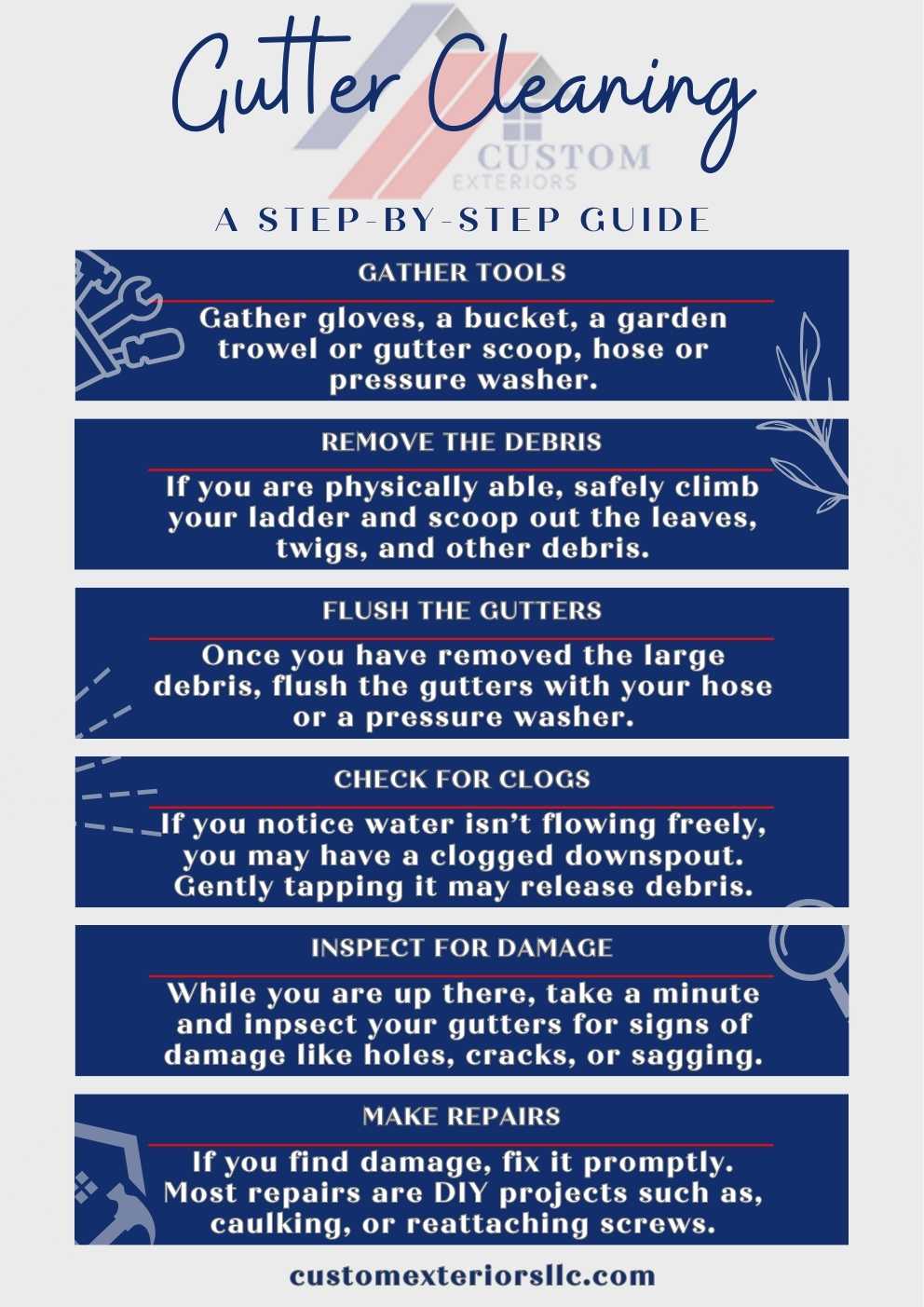
You’ll need a few basic tools before you start that will make the job smoother and quicker:
Following appropriate safety guidelines, climb up your ladder and start scooping out the leaves, twigs, and any other debris you find in your gutters. You can use your gloved hands, a garden trowel, or a gutter scoop to do this. Gutter scoops are a tool made to fit in and clear your gutters perfectly. They are available online and at your local home improvement store for under ten dollars. Put your debris in your bucket or the tarp you have laid below your work area. This is a messy job, so be prepared to get dirty. If the leaves are dry and loose and you are comfortable getting onto your roof, a leaf blower is a quick and effective method to clear the leaves.
Once you have cleared your gutters of all the visible pieces of debris, it’s time to flush out the gutters with your hose or pressure washer. If you use a pressure washer, start with low pressure and gradually increase your pressure to the lowest setting required to verify the water drains properly and flows freely. High-pressure water can cause extreme damage to your home. Flushing your gutters will help clear out any smaller bits and check that water can flow freely through your gutters and downspouts. If water backs up, there might be a clog in the downspout that you need to clear.
If you notice that water isn’t flowing freely, you may have a clog in one of your downspouts. Sometimes, tapping gently on the side of the downspout can loosen the debris. In tougher cases, you might need to use a plumber’s snake or high-pressure water to clear the blockage.
If you are already on your roof, it’s a great time to take a moment to look over your gutters and downspouts for any signs of damage, like holes, cracks, or sections that are pulling away from the house. These issues can lead to bigger problems if they’re not fixed. It’s also a good time to do a brief roof inspection while you have a closer look at the components.
If you find any damage, it’s important to fix it as soon as possible. Some repairs might be simple enough to do yourself, like sealing small holes or reattaching parts of the gutter that have come loose. For bigger repairs, you might need to call in a professional.
Tip 1: Use the Right Ladder: Invest in a sturdy, extendable ladder that reaches safely beyond the edge of your gutters. Another wise addition is a standoff stabilizer (also known as a ladder “horn” or “arm”). This keeps the ladder from resting directly on the gutters, which can cause damage such as denting or scratching.
Tip 2: Wear Protective Gear: Always wear gloves to protect your hands from sharp debris and edges inside the gutter. Safety glasses or goggles are also a must to protect your eyes from any flying debris. Also, depending on your level of comfort with heights, a harness can guard against injuries from falling.
Tip 3: Use a Gutter Scoop: A plastic gutter scoop is the best tool for removing gunky debris. It is designed to fit perfectly inside most gutter systems and is nearly a foot long, making short work of clearing gutters. It’s also tough enough to scrape out compacted material but soft enough not to damage the gutter.
Tip 4: Get a Garden Hose With a Spray Nozzle: After scooping out the debris, use a garden hose with a spray nozzle to flush the gutters. This helps you make sure water is flowing freely and draining away from your home properly. It also presents the opportunity to find any leaks that may need to be fixed before the rain/snow seasons.
Tip 5: Clean from the Ground When Possible: Consider using gutter cleaning tools that can be operated from the ground, such as gutter cleaning wands or a shop vac with gutter attachments. This reduces the risk of falls.
Tip 6: Secure Your Debris Bucket: Attach a bucket with a handle to your ladder with a lanyard or a hook for an easy way to keep debris close without having to go up and down the ladder too many times. You can also lay tarps under your work area instead of using a bucket and gather all debris at once.
Tip 7: Check the Weather: Plan your gutter cleaning on a day when the weather has been dry for a few days. Wet and soggy debris is heavier and messier to deal with.
Tip 8: Work Safely and Methodically: Move the ladder frequently rather than overreaching. Overreaching can destabilize your ladder and lead to falls. Take your time and work in sections to stay safe.
Tip 9: Inspect and Repair as You Go: Keep an eye out for any signs of damage or wear, such as cracks, holes, or rust. Small issues can often be repaired on the spot with gutter sealant or patches.
Regular gutter maintenance, along with routine exterior maintenance, offers long-term benefits that go far beyond curb appeal. Some of the immediate benefits of maintaining your home are:
Lastly, keeping up with gutter and exterior maintenance gives you peace of mind. Knowing that you’ve taken proactive steps to protect your home means one less thing to worry about. You can rest easy during heavy rains and storms, confident that your home is well-prepared to handle whatever the weather throws its way.
Just remember, the effort you put into maintaining your home’s gutters and exteriors pays off in the long run. Not only does it save you money by preventing costly damage, but it also maintains, and potentially increases, your home’s value, contributes to a healthier living environment, and provides peace of mind. So, take the time to schedule regular maintenance checks with your local gutter installation company – its and investment in your home’s future and your own well-being.